Literary Norfolk Header and Logo
 

Deserted Villages in Norfolk

Ill fares the land, to hastening ills a prey,
Where wealth accumulates, and men decay;
Princes and lords may flourish, or may fade;
A breath can make them, as a breath has made.
But a bold peasantry, their country's pride,
When once destroyed, can never be supplied.

The Deserted Village by Oliver Goldsmith


It is estimated that there are over 150 deserted villages in Norfolk - more than in almost any other county in England. Originally it was thought that all abandoned villages in the county were the result of the Black Death which occurred in 1349 - but today it is known that other factors were involved.

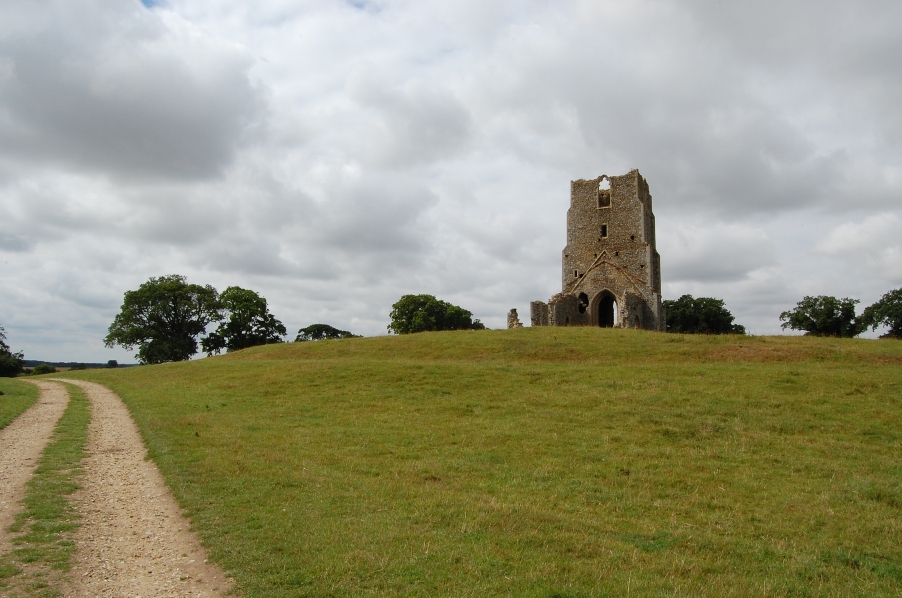
Godwick Church Tower by Nick Stone

Godwick Church Tower - photograph © Nick Stone

St Edmund, Egmere

The remains of St Edmund's Church Egmere

Norfolk is an arable county and many deserted village sites have been lost under the plough. However, earthwork patterns often reveal themselves through aerial photography.

One of the other ways of identifying deserted villages is the presence of a church with no visible community. Norfolk has many isolated churches - as at: Oxnead, Braydeston, Cranwich, Shotesham St Mary, Great Hautbois and Hales. Sometimes, as at Cranwich and Oxnead, there are clear signs of earthworks nearby.

Braydeston Church

Braydeston Church

In the case of coastal erosion or emparking, it is easy to determine the cause of desertion. However, in other cases, the exact cause is less easy to identify and may have been the result of a number of different factors working over a long period of time. The Domesday Book provides important information - as do the Lay Subsidies and the Hearth Taxes during the medieval period. By following the number of households liable for taxation it is possible to trace the economic decline of villages. Hales, for example, had a substantial population at the time of the Domesday Book but by 1334 was considerably smaller. Today the modern village lies a number of miles away from the beautiful, round-towered Norman church. 

The full roll call of Norfolk deserted villages is as follows (based on the work by Alan Davison): Alethorpe, Appleton, Arminghall (possible) Ashby, Babingley, Barmer, Barningham (North), Barningham (Town), Barwick (Great), Bawsey, Bayfield, Beachamwell, Beeston St. Andrew, Beeston St. Lawrence, Bickerston, Bittering (Little), Bixley, Bodney, Bowthorpe, Braydeston, Broomsthorpe, Brumstead, Buckemham Tofts, Burgh, Bylaugh, Caldecote, Choseley, Colveston, Cranwich, Didlington, Earlham, Eccles, Egmere, Foston, Frenze, Gasthorpe, Godwick, Greynston, Gunton, Hales, Hargham, Harling (Middle), Harling (West), Hautbois (Great), Hautbois (Little), Heckingham, Herringby, Hockham (Little), Holkham, Holverston, Houghton, Houghton-on-the-Hill, Illington, Ingloss, Irmingland, Kempstone, Kenningham, Kilverstone, Langford, Letton, Leziate, Longham, Lynford, Mannington, Markshall, Mintlyn, Narford, Oby, Oxborough, Oxnead, Palgrave (Great), Palgrave (Little), Pattesley, Pensthorpe, Pudding Norton, Quarles, Rackheath (Little), Riddlesworth, Ringstead (Little), Roudham, Rougham, Roxham, Ryston, Santon, Saxlingham Thorpe, Shingham, Shotesham St. Mary, Snarehill (Great), Stanford, Stanninghall, Sturston, Summerfield (Southmere), Sutton, Tattersett, Testerton, Thorpe Parva, Thorpland, Threxton, Thuxton, Wallington, Waterden, Weasenham St. Peter, West Tofts, Windall, Winston, Witchingham (Little), Wolterton, Wreningham (Little) and Wretham (West).

Below are some the main causes of abandonment in Norfolk:
 

1) Depopulation

Although the Black Death of 1349 doesn't account for all the deserted villages in the county, it certainly had a profound effect upon the population of 14th century Norfolk. It is estimated that the Black Death killed between 30-60% of the population of Europe. In some cases the Black Death would have weakened the ability of communities to survive. The 14th century was also a time of harsh winters causing widespread famine and plagues which affected both livestock and humans.

By 1428, the village of Godwick near Fakenham had only 10 households  and numbers were further driven down by a series of bad harvests and by the heavy clay soils. By 1525 it had only five households paying tax and it was finally abandoned at the end of the sixteenth century.


2) Stately Homes or Emparking

Some deserted villages occurred as a result of the building of stately homes. Many stately homes were built in Norfolk during the 18th Century and some villages were cleared to make way for parkland or to improve the view from the hall's windows. To be fair, some of these villages may have been in decline before the halls were built.

Houghton is a good example of a village that was lost when Sir Robert Walpole created Houghton Hall. A similar fate befell Wolterton when his brother, Horatio Walpole, commissioned Wolterton Hall.

Wolterton Church Tower

Wolterton Church Tower

At Wolterton the old church tower remains just behind the hall. The last burials in the churchyard coincided with the building of the estate. Other villages affected in this way were Felbrigg, Holkham, Didlington and Gunton.


3) Farming Practices

During the medieval period most villages operated an 'open field' system where peasants would farm strips of land. After the hard winters of the 14th century and the decline in the population, richer farmers bought up land and used it for grazing sheep. This type of enclosure would have been a major cause of deserted villages. The enclosure of land was one of the main causes leading to Robert Kett's rebellion in 1549.

Over-grazing of land has been identified as a key reason for abandonment at Sturston, Bawsey, Leziate, Mintlyn and Narford.


4) The Brecklands

The Brecklands have always consisted of sandy, infertile soil - making agriculture more precarious than in other parts of Norfolk. When the diarist John Evelyn passed through the region in 1677 he remarked:
 

'The Travelling Sands.......that have so damaged the country, rouling from place to place, like the Sands in the Deserts of Lybia, quite overwhelmed some gentleman's whole estates.'

There are at least 30 deserted villages in the Brecklands only. Poor quality soil has undoubtedly resulted in the loss of some villages. The establishment of warrens may also have played a part.
 
5) Coastal Erosion

Some villages have became deserted due to coastal erosion. Just off the coast at Cromer is the submerged village of Shipden which was washed away during the 14th Century. In 1888 a tug struck the church tower of St. Peter's Church.

Further down the coast lies the famous lost village of Eccles-on-Sea. Much of the village was washed away during a violent storm in 1604 and in1895 the church tower slipped onto the beach - where it remained until the sea finally reclaimed it.

Little Waxham was another Norfolk village lost to the North Sea.

The sea is continually eating away at the cliffs and beaches of Norfolk and a number of churches have been claimed. At Sidestrand however, materials from the old church were reclaimed to build a replica further inland.


6) Engrossment

Occurred from the sixteenth century onwards and was the result of the lord of the manor gradually purchasing the land of of his tenants - usually after they died. Ultimately, this process would culminate in the creation of an estate consisting of a sole manor house, a home farm and a church. Examples of engrossment in Norfolk include: West Raynham, Threxton and Narford.


7) Stanford Military Training Area

Deserted villages have also occurred in more recent history. During the Second World War an area in the Brecklands was cleared in order to create a military training area - now known as STANTA or the Stanford Training Area. To create this land for army manoeuvres, several villages were lost including: Lynford, Langford, West Tofts, Tottington and Stanford. Villagers in parts of Ickborough, Hilborough, Little Cressingham, Merton, Thompson, Wretham and Stow Bedon were also affected.

STANTA

Stanford Battle Training Area

Following a public meeting in June 1942 villagers were given one month to move out by the military. In total, nearly 1,000 men, women and children were forcibly evacuated from the 17,500-acre site. It was understood, at the time, that these people would be able to move back to their homes after the war - however the military never honoured this promise.

Many of the churches still remain and can be visited with special permission from the Ministry of Defence. In fact, in September 2009 one of the evacuees, a William Hancock, was given special dispensation to be buried in the churchyard of St Andrew's Church at Tottington next to members of his family. Mr Hancock was the first person to be buried at the church for 50 years; he had also been christened here.

For anyone interested in finding out more about deserted villages in Norfolk, there is an excellent book by Alan Davison (my old geography teacher at Thorpe Grammar School) entitled Deserted Villages in Norfolk. It is published by the Poppyland press (see link).
 

Links:

More Photographs of Norfolk deserted villages

Deserted village haiku

Map of Norfolk deserted villages

The deserted village of Godwick

Search the Site


Supported by Norfolk County Council logoSupported by Norfolk Tourism


About Us | Poems by Cameron Self | Advertise on Literary Norfolk

©Cameron Self 2007-2011                                                                                                                Hosted by UK Web.Solutions Direct