Literary Norfolk Header and Logo
 

Itteringham

Itteringham lies a few miles north-west of Aylsham. The name probably derives from the homestead of Ytra's or Ytri's people.

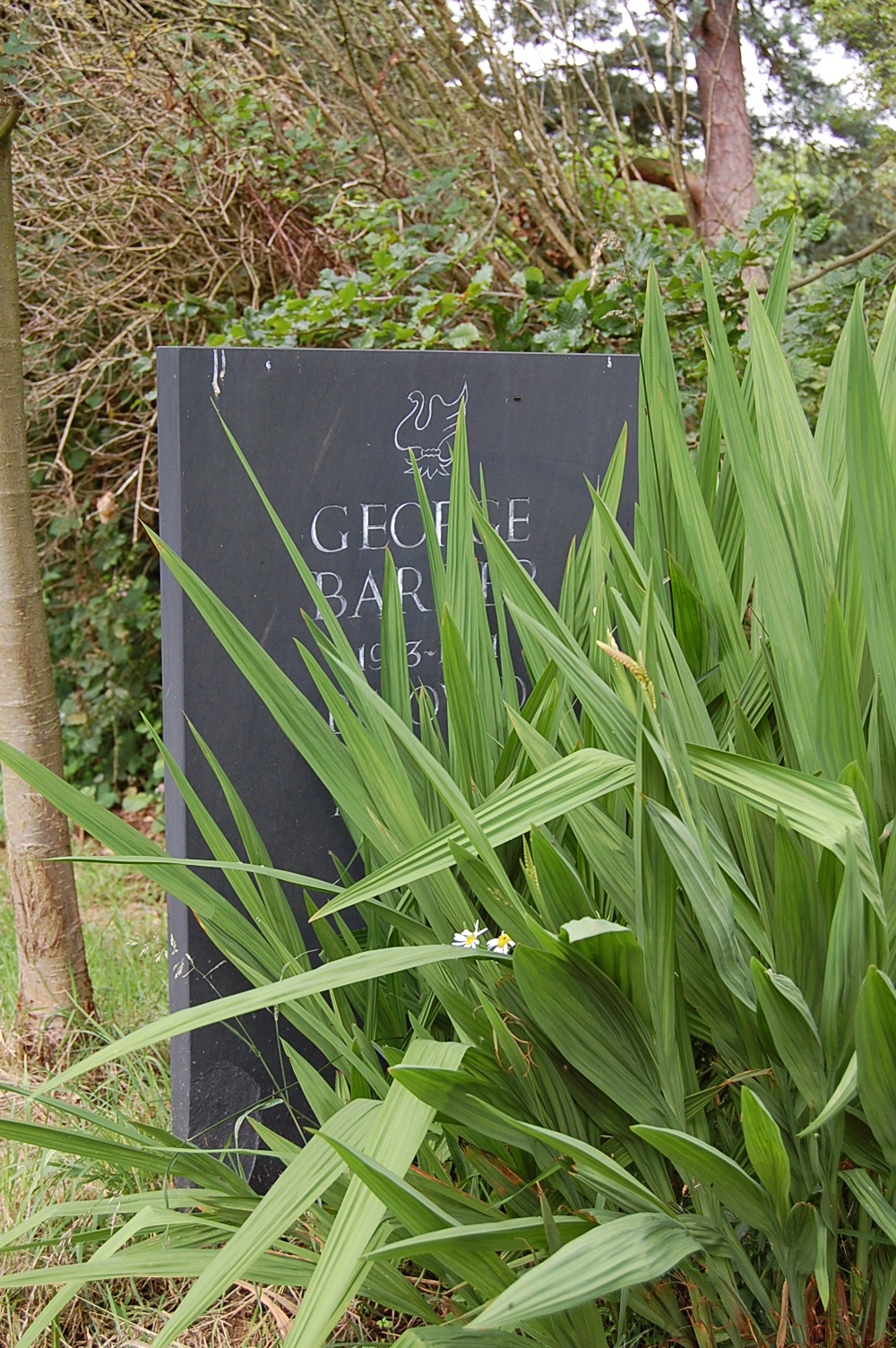
The poet George Barker (1913-1991) is buried in St. Mary's churchyard. At the foot of his grave lies a granite book with the words: 'No Compromise' inscribed.

George Barker's Grave

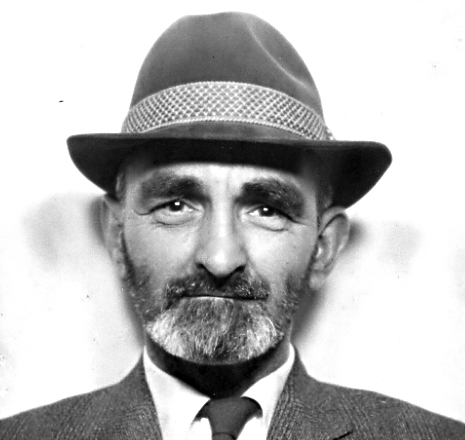
George Barker

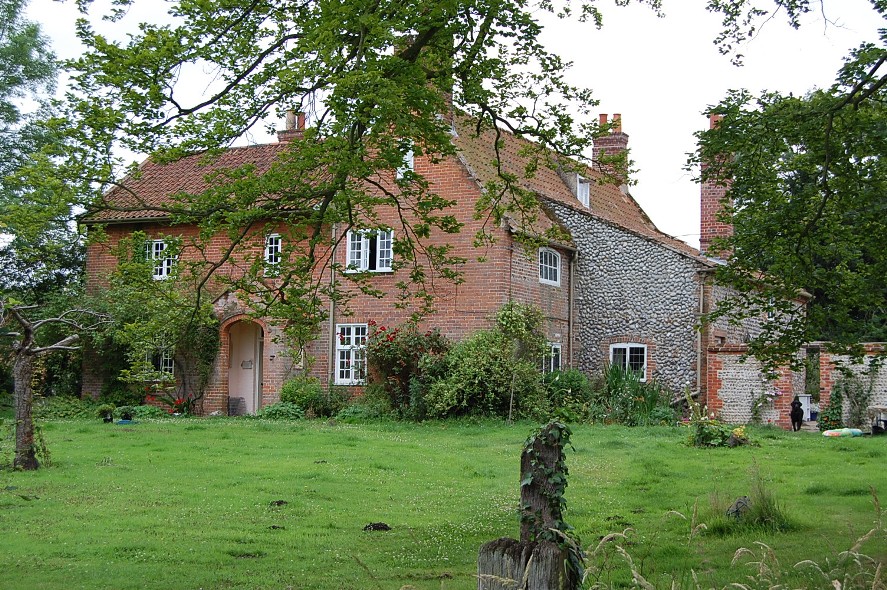
Barker lived for many years in the village at Bintree House with his wife the novelist Elspeth Barker. The flint and brick house lies just off the main street - close to the River Bure. The couple were able to acquire the house with financial support from the novelist Graham Greene who was a long-term admirer of Barker's poetry. In her essay Thoughts in a Garden Elspeth Barker describes the watery location of the house:
 

'Mine is a riverine garden, and even indoors one is aware of this, not just by gazing through the window but by simply sitting still, committing words to paper in the intense cold, while a great numbness seeps up through feet and lower limbs. Hemlock and the death of Socrates come forward in the mind. The tiled floor is laid straight on the earth in the manner of 17th century folk, and beneath this floor and a thin layer of earth lie the black sullen waters of an underground lake.'


Barker's daughter Raffaella, who is also a writer, wrote Come and Tell Me Some Lies (1994) - a semi-autobiographical novel about growing up in the house. She also appeared as an extra, alongside her mother, in the cricket scene in Joseph Losey's The Go-Between. The scene was shot on nearby Thornage common in the summer of 1970.

George Barker was renowned as a hard drinker and womaniser and had a total of 15 children by various women. He also regularly used Methedrine and Benzedrine.

Bintree House, Itteringham

Bintree House

Barker also had a affair with the Canadian poet Elizabeth Smart which inspired her to write By Grand Central Station I Sat Down and Wept. (Elizabeth Smart lived for many years at Flixton in Suffolk and is buried in the churchyard at St. Cross South Elmham.)

 River Bure at Itteringham

The River Bure

In his poem Morning in Norfolk Barker provides us with a beautiful description of the River Bure:
 

The dawn has brightened the
shallows and shadows and
the Bure sidles and idles
through weed isles and fallen
willows, and under
Itteringham Mill, and
there is a kind of rain-
drenched flittering in the
air, the night swan still
sleeps in her wings and over it all
the dawn heaps up the hanging
fire of the day.


Much of Barker's poetry concerns sin and forgiveness and is intimately connected with his Roman Catholic upbringing. However, in his later years he also found inspiration from the Norfolk landscape - as can be seen in his moving poem At Thurgarton Church. He frequently visited Thurgarton church - which lies a few miles north of Itteringham - and was no doubt struck by its thatched roof and lack of a tower.

Barker is often associated with the 'new romantic' school of poetry - along with Dylan Thomas. However, since his death Barker's popularity has declined. The may be due, in part, to the success of the Movement poets such as Philip Larkin.
 

Links:

St. Mary's Church

Itteringham Village Website

Elizabeth Smart's Grave

Raffaella Barker

Search the Site


Supported by Norfolk County Council logoSupported by Norfolk Tourism


About Us | Poems by Cameron Self | Advertise on Literary Norfolk

©Cameron Self 2007-2011                                                                                                                Hosted by UK Web.Solutions Direct