Literary Norfolk Header and Logo
 

Little Walsingham

Little Walsingham lies approximately 5 miles south of Wells-Next-The-Sea.

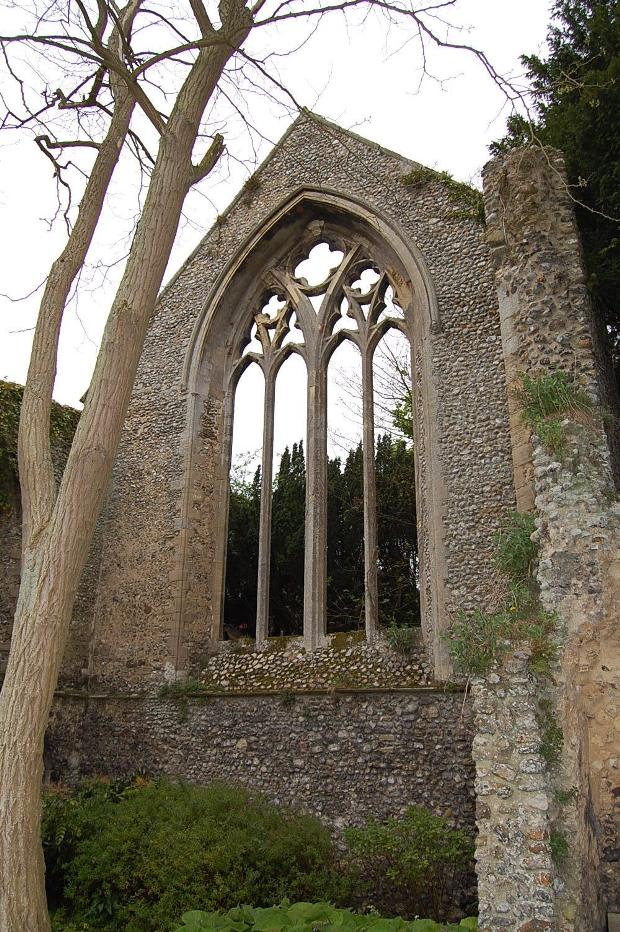
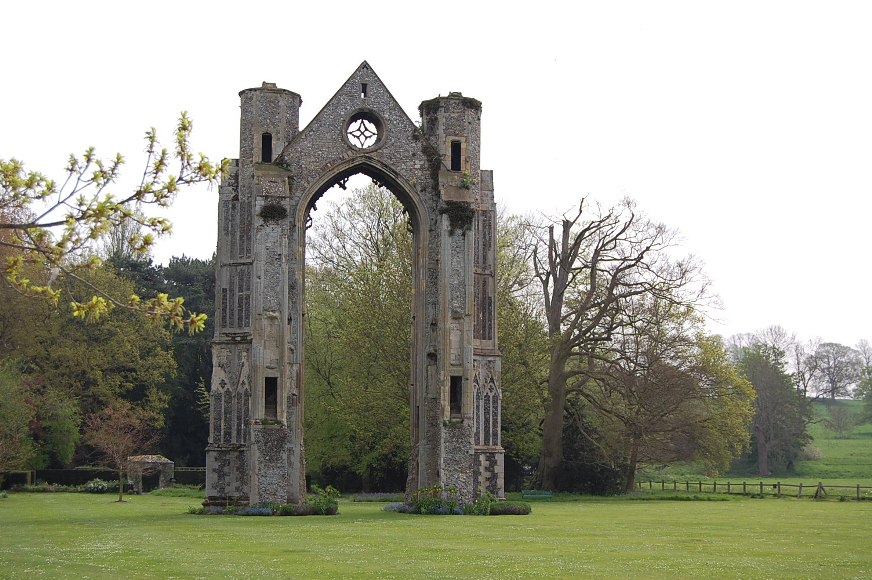
In about 1061, the Holy Virgin appeared to Lady Richeldis de Faverches in Walsingham. Mary instructed the widow to build a house modelled on the Holy House in Nazareth. This she subsequently did and some time later an Augustinian abbey was built on the banks of the River Stiffkey nearby. (The location of the original house has been identified by archaeologists.) Little Walsingham became one of the most sacred sites in England and was visited by every English king. Even Henry VIII made the pilgrimage - walking the last mile barefoot. However, the Reformation was soon to destroy the abbey. Today, all that remains of it is the east wall with its high Gothic window, parts of the refectory and a picturesque packhorse bridge across the River Siffkey.
Little Walsingham has inspired many literary references. One of the earliest is in Piers Plowman by William Langland (c.1330 - c.1386):
 

Heremytes on an heep with hoked staves
Wenten to Walsyngham, and their wenches after,
Grete lobies and longe that lothe were to swynke;
Clothed hem in copes, to be knowen from othere;
And shopen hem heremytes, their ese to have.
 

East Window, Walsingham Abbey

Packhorse Bridge, Walsingham Abbey

Refectory Ruins

The ruins of Walsingham Abbey. Top left: the East Window; Top right: the packhorse bridge; Bottom left: the refectory; Bottom right: the refectory window

Refectory Window


The following poem is attributed to Saint Philip Howard, Earl of Arundel (1557-1595) and laments the destruction of the abbey.
 
On Walsingham

In the wrackes of Walsingham
     Whom should I chuse
But the Queen of Walsingham
     To be guide to my muse?

Then thou Prince of Walsingham
     Grant me to frame
Bitter plaintes to rewe they wrong
     Bitter wo for my name.

Bitter was it oh to see
     The seely sheepe
Murdered by the raveninge wolves
     While the sheephards did sleep.

Read complete poem


There is also another poem with a Walsingham connection which was written by Sir Walter Ralegh - although some scholars now cast doubt on this attribution. Its title is Walsingham and it is essentially a love poem. Here are the first verses:
 
'As you came from the holy land
  Of Walsingham,
Met you not with my true love
  By the way as you came?'

'How shall I know your true love,
  That have met many one
As I went to the holy land,
  That have come, that have gone?'

Read complete poem


The Anglican Shrine in Little Walsingham was built in 1931 and is one of the most famous places for Christian pilgrimage in the world.

Anglican Shrine at Walsingham

England's Nazareth

The American poet Robert Lowell (1917-1977) wrote the following moving poem entitled Our Lady of Walsingham
 

There once the penitents took off their shoes
And then walked barefoot the remaining mile;
And the small trees, a stream and hedgerows file
Slowly along the munching English lane,
Like cows to the old shrine, until you lose
Track of your dragging pain.
The stream flows down under the druid tree,
Shiloah’s whirlpools gurgle and make glad
The castle of God. Sailor, you were glad
And whistled Sion by that stream. But see: 

Our Lady, too small for her canopy,
Sits near the altar. There’s no comeliness
At all or charm in that expressionless
Face with its heavy eyelids. As before,
This face, for centuries a memory,
Non est species, neque decor
.
Expressionless, expresses God: it goes
Past castled Sion. She knows what God knows,
Not Calvary’s Cross nor crib at Bethlehem
Now, and the world shall come to Walsingham.


Links:

Shrine of Our Lady at Walsingham

Search the Site


Supported by Norfolk County Council logoSupported by Norfolk Tourism


About Us | Poems by Cameron Self | Advertise on Literary Norfolk

©Cameron Self 2007                                                                                                                 Hosted by UK Web.Solutions Direct