Ditchingham
Ditchingham lies on the Norfolk-Suffolk border close
to the River Waveney.
The village is best known for its links with the Haggard
family.
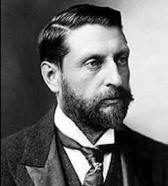
Sir Henry Rider Haggard (1856-1925)
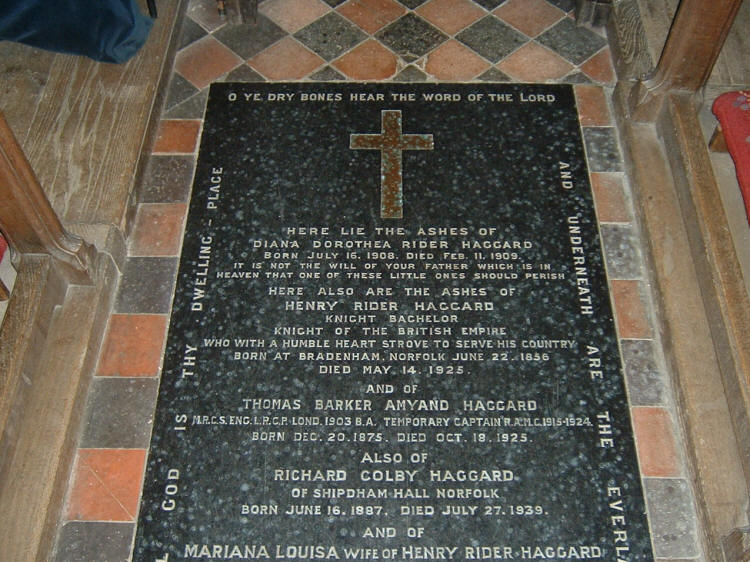
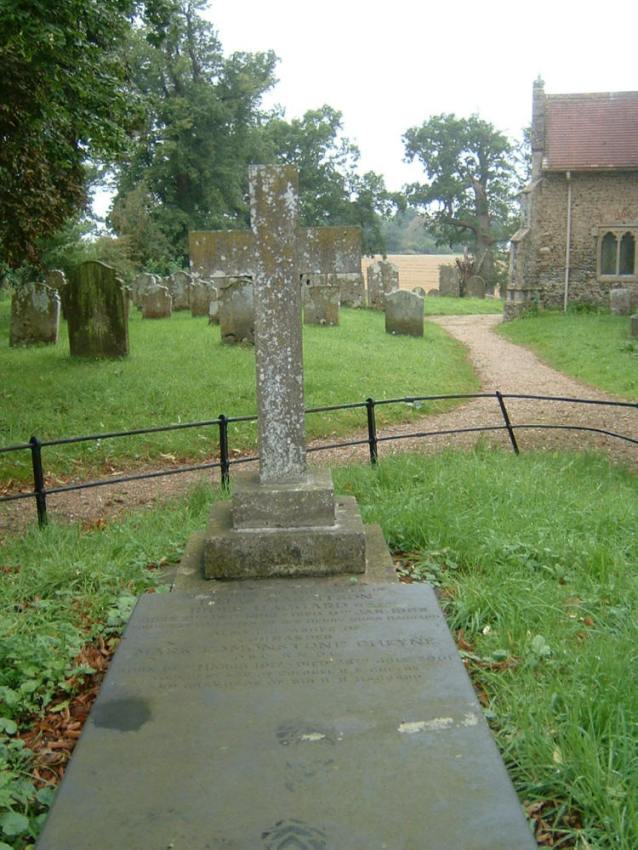
Henry Rider Haggard is buried in the chancel of
St Mary's Church at Ditchingham. He also married
Louisa Margitson in the church and the couple lived for
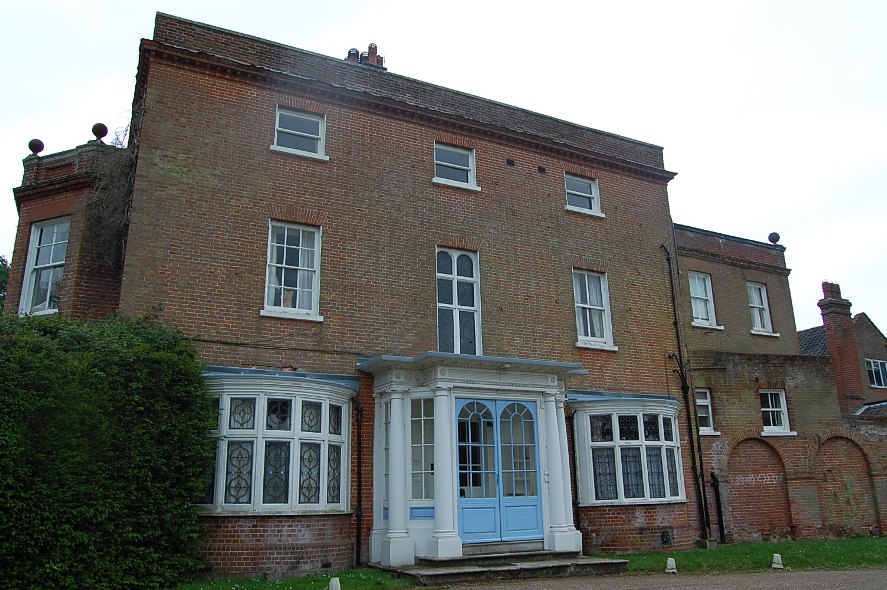
many years at nearby Ditchingham House - which lies on
the opposite side of the Bungay Road. Most of his
sixty novels were written here. His study was the room
to the right of the main house with the large bay window.
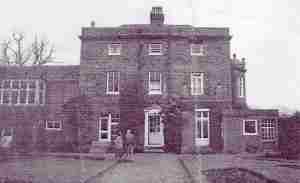
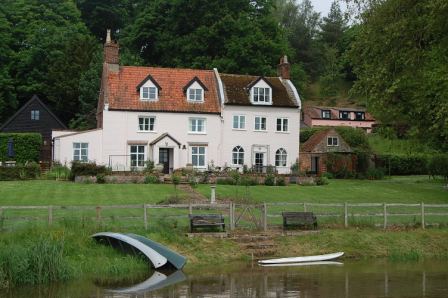
Ditchingham House
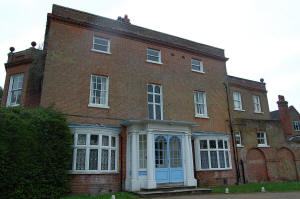
Ditchingham House
today: turned into flats
Despite being intimately connected
with Norfolk life, his best known novels - such
as She and King Solomon's Mines - are set in
Africa. As a young man he spent 6 years in Africa - a
time which inspired much of his writing. Like his friend
Rudyard Kipling - his Empire-based fiction reached a
wide and appreciative audience. In fact, for a five-year
period he was probably the best-selling author in the
world. One of his lesser-known books Colonel Quaritch,
VC (1888) is, however, set in Norfolk.
The Norfolk Record Office at County Hall possess a
number of Haggard's hand written manuscripts.
Haggard also wrote books
on farming including: The Farmer's Year (1899)
and The Poor and The Land and Rural England
(1902). Here is a description of the village from The
Farmer's Year:
|

 Supported
by Norfolk Tourism
Supported
by Norfolk Tourism