|
|
|
|
Horsey
Horsey lies on the Norfolk coast between
Winterton and Sea Palling.
Its name derives from 'horse land' surrounded by water. Just inland of the village lies Horsey Mere which is
accessible by boat from the River Thurne via Heigham
Sound and Meadow Dyke.
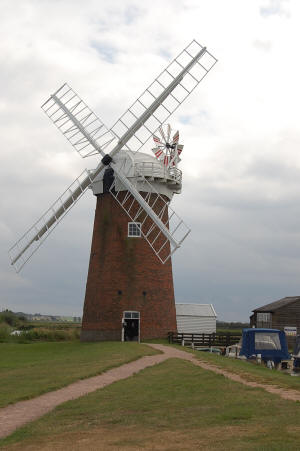
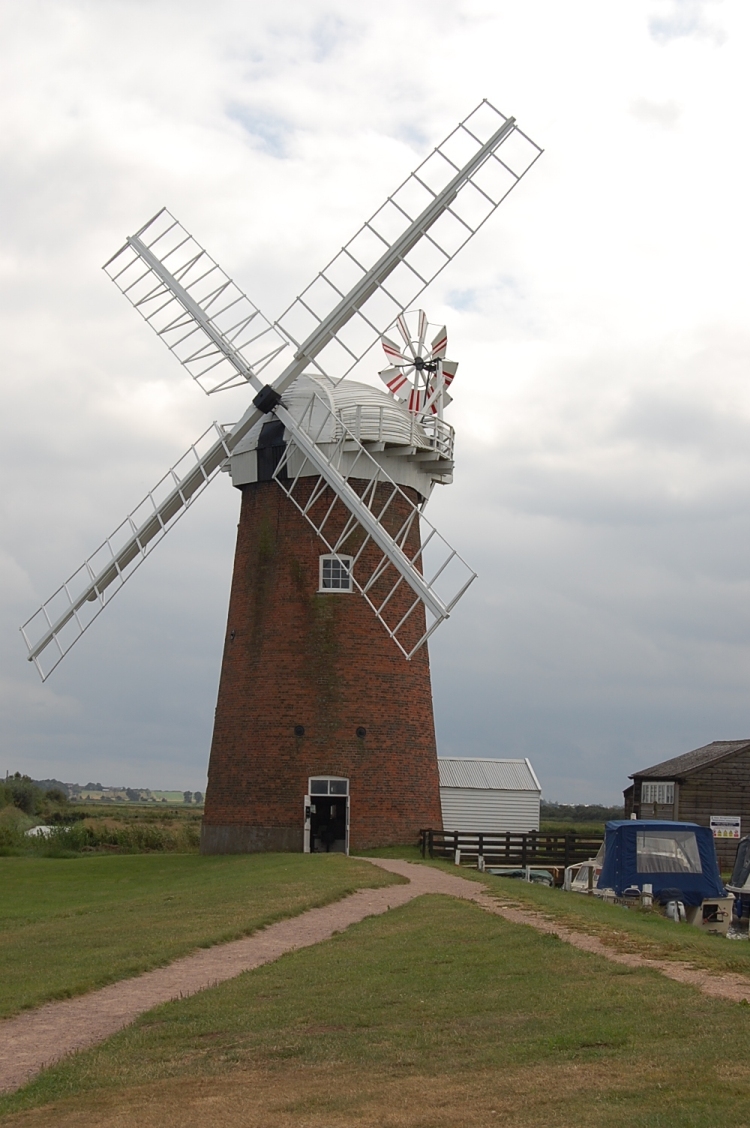
Horsey Mill
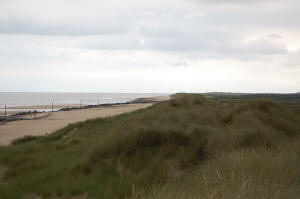
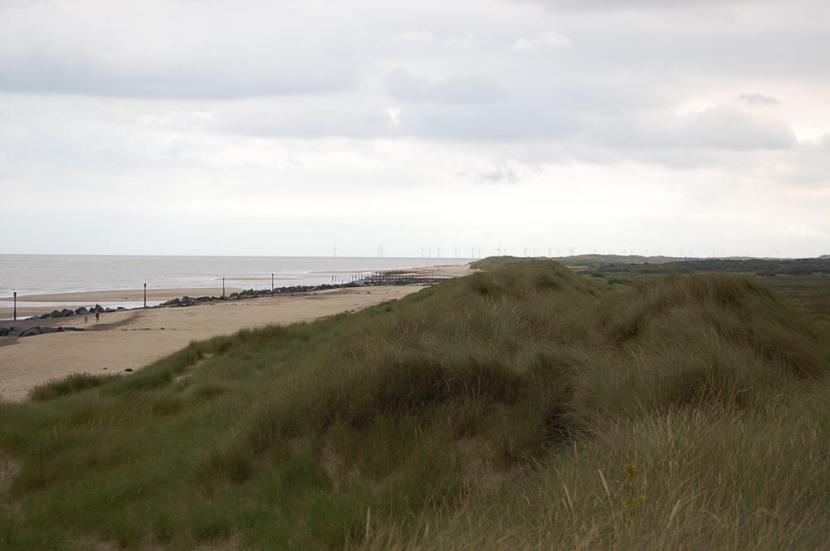
Horsey Beach and Dunes
Arthur Ransome (1884-1967)
In Coot Club
the children sail up the River Thurne to Horsey Mere in the Teasel.
While on the Mere they spot a pair of marsh harriers:
|
They swept across the Mere to the far reed-beds, turned
and were half-way back, when, almost in a shout, Dick
cried, "There's our one more bird. Look! It's a hawk.
Yellow head..."
"Marsh Harrier," said Tom. "Jolly rare."
"There's another," said Dick. "Tow of them."
One bird was high above the reeds. The other, the larger
one, was rising towards it. |
|
Wilkie Collins (1824-89)
In his novel Armadale (1866) Wilkie Collins
transforms Horsey Mere into 'Hurle Mere' - and in so
doing - succeeds in capturing the beauty and mystery of
the Broadland landscape.
John Betjeman (1906-84) The poet John Betjeman used to visit the Norfolk
Broads when he was a child and was familiar with Horsey
Mere and the nearby coastline. In his poem East
Anglian Bathe he refers to it specifically:
|
Oh when the early
morning at the seaside
Took us with hurrying steps from Horsey Mere
To see the whistling bent-grass on the leeside
And then the tumbled breaker-line appear,
On high, the clouds with mighty adumbration
Sailed over us to seaward fast and clear
And jellyfish in quivering isolation
Lay silted in the dry sand of the breeze
And we, along the table-land of beach blown
Went gooseflesh from our shoulders to our knees
And ran to catch the football, each to each thrown,
In the soft and swirling music of the seas.There splashed about our
ankles as we waded
Those intersecting wavelets morning-cold,
And sudden dark a patch of sky was shaded,
And sudden light, another patch would hold
The warmth of whirling atoms in a sun-shot
And underwater sandstorm green and gold.
So in we dived and louder than a gunshot
Sea-water broke in fountains down the ear.
How cold the bathe, how chattering cold the drying,
How welcoming the inland reeds appear,
The wood-smoke and the breakfast and the frying,
And your warm freshwater ripples, Horsey Mere. |
Richard MabeyIn his book Nature Cure - the naturalist
Richard Mabey visited Horsey Mere and was lucky enough
to spot some cranes.
|
|
'Cranes are the
epitome of wild places, and their return to the Broads
is a blessing, a sign that their sense of wilderness
hasn't been entirely destroyed. They had come of their
own accord, settled where they wanted, and survived
without any elaborate protection systems or habitat
manipulation. No wonder that across the world, they are
regarded as symbols of good luck, renewal and
fertility.' |
The crane was once common in England but became extinct in
the 17th Century. In1979, cranes re-appeared in the Norfolk Broads
and remained through out the winter. The first chick was successfully raised
in 1982. At the moment the RSPB
predict that there are approximately 100-200 birds in
the UK.
Horsey Gap is also one of the most vulnerable sections
of the Norfolk coastline. If the sea breaks through the
sand dunes here - as it last did in 1953 - then
thousands of acres of low lying pasture land could flood.
Such a salt water incursion would also be detrimental to
bird life and freshwater fish stocks. Here is an
anonymous rhyme which encapsulates the sea's threat (via Horsey) on the whole of the Broads system:
|
When the sea comes
in at Horsey Gap
Without any previous warning,
A swan shall build its rushy nest
On the roof of the Swan at Horning.
And a bald headed crow, contented and merry,
Shall feast on the corpses that float by the ferry. |
Links:
More photographs of Horsey |
|
|
|

 Supported
by Norfolk Tourism
Supported
by Norfolk Tourism