King's Lynn
King's Lynn lies at the mouth of the
River Great Ouse
just south of its confluence with The Wash. Historically,
King's Lynn was one of England's most important ports - trading with
countries through out the world. As well as literary
figures, it was also the home of George Vancouver
who claimed British Columbia in the name of the English
Crown.
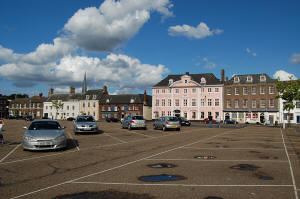
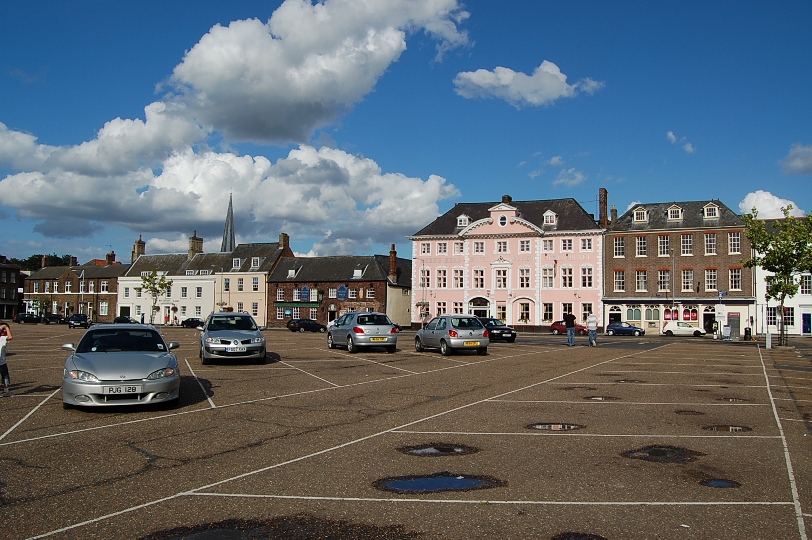
Tuesday Market Place
The town is undoubtedly one of Norfolk's
best-kept secrets and streets such as the Purfleet and
King Street offer a wealth of historic buildings and
period charm - a fact which has not been overlooked by
the film and TV production companies. (See
Norfolk Film
Locations for more information.)
|
|
Margery Kempe (c.1373- c.1439)
Margery Kempe was born in King's Lynn and was the
daughter of John Brunham who was once the Lord Mayor.
During her lifetime she went on many pilgrimages
- both in the UK and on the continent - and even visited
Rome, Santiago de Compostela and Jerusalem. The
Book of Margery Kempe is a record of her spiritual
journey and was dictated some time during the 1420s - as
she could neither read nor write. The manuscript
of the book was discovered in 1934 at Pleasington Hall
in Lancashire. It is now regarded as the first ever
autobiography written by a woman. In it she records a
fire in15th-century King's Lynn which
threatened to engulf St. Margaret's Church. (Bishop's
Lynn was the original name of the town.):
|
|
'On a time, there happened to be a great fire in Lynne
Bishop, which fire burnt up the Guild Hall of the
Trinity, and in the same town, a hideous and grievous,
full likely to have burnt the parish church dedicated in
honour of Saint Margaret, a stately place and richly
honoured, and all the town as well, had there been no
grace or miracle.' |
Margery was originally married to John Kempe and gave birth to 14 children.
However, she gave up married life - took a
vow of chastity and dedicated her life to God. She was
frequently overcome by weeping during her prayers inside
St. Margaret's - which disturbed other worshippers.
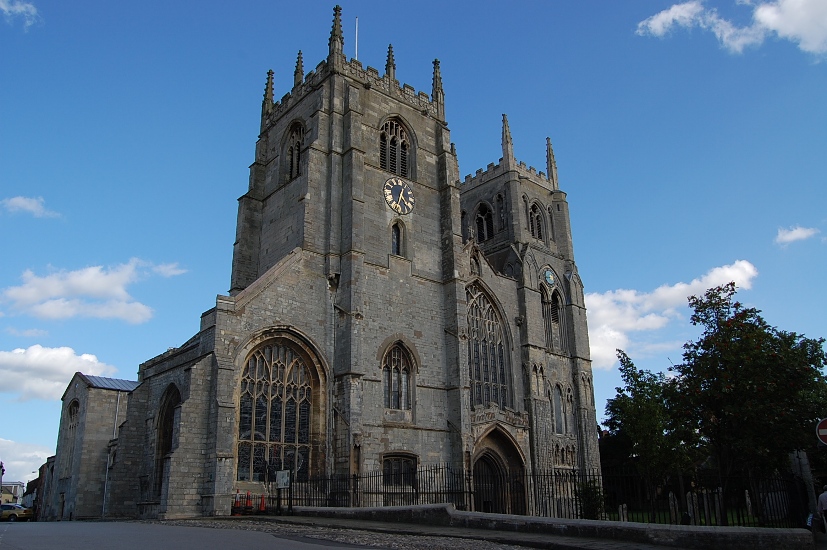
St. Margaret's is one of the largest churches in the
country. It was founded in 1101 and partially rebuilt in
1741 after the spire collapsed onto the knave during a
storm.
|
|
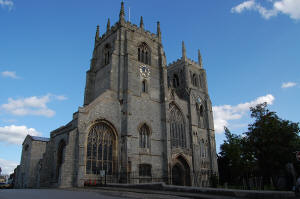
St Margaret's Church Margery
also visited
Julian of Norwich (the 'Recluse atte Norwyche') and recorded the
meeting in her book. She
remained in Norwich for a number of days and Dame Julian
counselled her to: 'Set all your trust in God
and fear not the language of the world. Patience is
necessary for you, for in that shall ye keep your soul.'
Like Julian, Margery was a mystic
but the two women were very different in their spiritual
approach - one travelling widely - the other remaining
in her cell by the River Wensum. |
Daniel Defoe (1660-1731)In his A Tour Through the Whole Island of
Great Britain Daniel Defoe was hugely impressed by
King's Lynn preferring it, in many ways, to both Norwich
and Yarmouth.
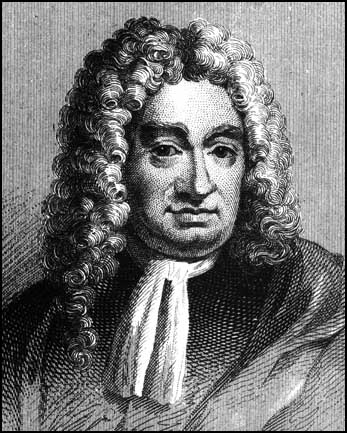
Daniel Defoe Here is the passage:
|
|
'It stands on more ground than the town of Yarmouth, and
has I think parishes, yet I cannot allow that it has
more people than Yarmouth, if so many. It is a beautiful
well built, and well situated town, at the mouth of the
River Ouse, and has this particular attending it, which
gives it a vast advantage in trade; namely, that there
is the greatest extent of inland navigation here, of any
port in England, London excepted. The reason whereof is
this, that there are more navigable rivers empty
themselves here into the sea, including the Washes which
are branches of the same port, than at any other mouth
of waters in England, except the Thames and the Humber.' |
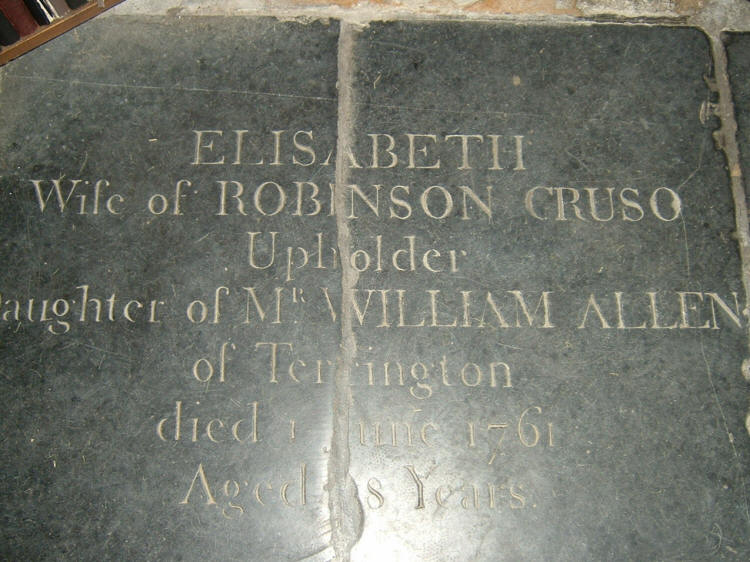
There are also a number of
'Robinson Crusos' (without the 'e') buried in St. Nicholas' Chapel
in King's Lynn.
However they all post date Robinson Crusoe which was published in 1719.
Nevertheless, it is
fascinating to ponder whether Defoe may have been
familiar with the family and used the name when he was
writing his famous novel. Defoe certainly visited the town in
1724 - and he was well aware of King's Lynn's rich
maritime history.
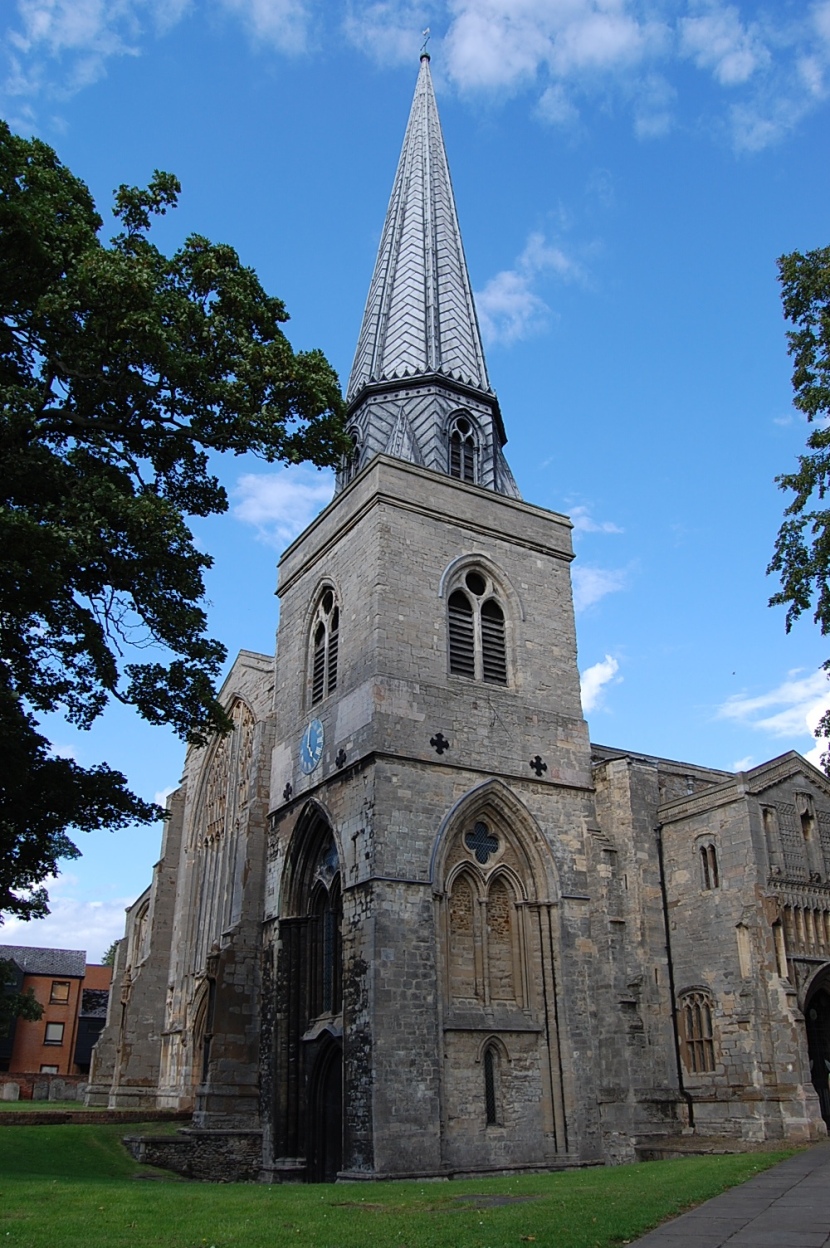
St. Nicholas' is England's largest surviving Parochial
Chapel and its 15th century wooden roof features a
magnificent series of carved angels.
See also Great Yarmouth
and Winterton.
|
|
Fanny Burney (1752-1840)
The novelist and diarist was born in King's Lynn -
possibly at 84, High Street - but when she was young her
family moved to London where she grew up amongst the
capital's literary set - mixing with the likes of Dr
Johnson, Joshua Reynolds and Edmund Burke. At the age of 25 she wrote
a successful novel entitled Evelina. This was
followed by Cecilia (1782) and Camilla (1796). In 1793,
she married General d'Arblay - a French refugee in
England.
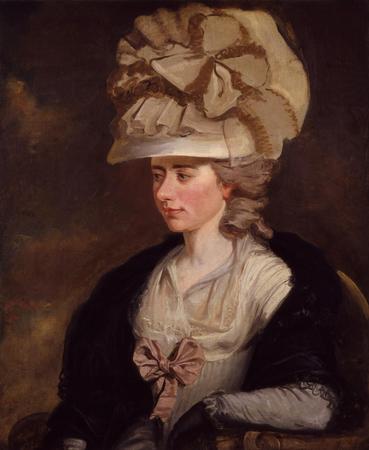
Fanny Burney
Here is a passage from her diary where she recalls
her own
confirmation - which she wrote at a time when she was preparing her son Alex for his
confirmation:
|
|
'I remember well that, when I was preparing....I had such
an idea I should undergo an examination and I was
fearful of some wry question that might discountenance
me, that I learnt nearly the whole common prayer book by
heart! - Besides reading the Bible quite through three
times! I was so indefatigable, I rose to nothing else;
and never went to rest while I could procure light for
my labours. Alex would not be much led to imitate me, if
I knew that, after all this hard work - the fat clumsy
stumpy worthy Bishop of Norwich clapt his hand upon my
head, and off it, as fast as he possibly could, and
never made a single interrogatory, nor uttered a single
doubt or demur upon my fitness or unfitness for his
blessing.' |
|
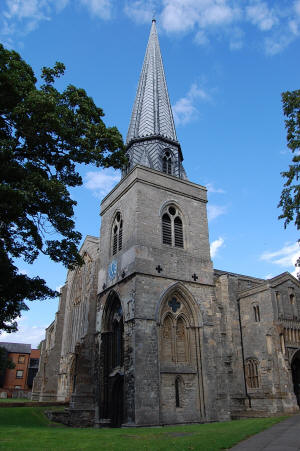
St. Nicholas' Chapel |
|
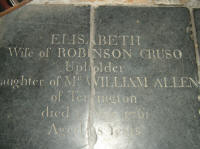
Cruso family gravestone
|
|
Thomas Hood (1799-1845) Wrote a poem called The
Dream of Eugene Aram - about a master at the Grammar
School in King's Lynn who was arrested for murder in
1758. The last verse of the poem goes as follows:
|
That very night,
while gentle sleep
The urchin eyelids kissed,
Two stern-faced men set out from Lynn,
Through the cold and heavy mist:
And Eugene Aram walked between,
With gyves upon his wrist.
Read more |
R.N. Currey (1907-2001)This East Anglian based
poet (who was born in Africa) wrote a memorable poem
about Lynn - referring to it as 'This town that history
could have made a city'.
|
Just opposite the
elegant Custom House
So feasibly attributed to Wren
We watched the racketting pile-driver
Man-shouldered into place
By greasy caps and coats with pennant linings
Fluttering heraldic in the north-east wind.Beside it
on the quay a square-hewn stake
Extracted from the past - a broken tooth
Stained at the root - the crude support
Of civic splendour in the years of grace.
Explore now, as a freak tide might explore
This town that history could have made a city,
Swirl round the leaning pillars of this church
That could be a cathedral, then move on,
Inquisitive as water,
Over the docks, across the squares,
Into courtyards, under entrances.
Leave tides below, and climb
The winding centuries of a merchant’s watchtower
To scan the wide way to the wider sea
For pennants fluttering in the north-east wind.
Step down to what the tides have left behind:
In the marsh-sunken chapel-of-ease
Two Dutch-scrubbed likenesses,
A merchant and his wife, as shrewd
And thrifty as the north-east wind,
Square-hewn,
Embedded in the local mud - essential
Supporters of armorial elegance. |
King's Lynn has also been immortalised by the works of
the painter William Dexter (1878-1958). He was trained
at Birmingham School of Art and lived for a time in a
converted fishing boat on the River Nar. He was killed
by a motorcycle while crossing the Saturday Market
Place.
|
Links:
More photos of King's Lynn |

 Supported
by Norfolk Tourism
Supported
by Norfolk Tourism