|
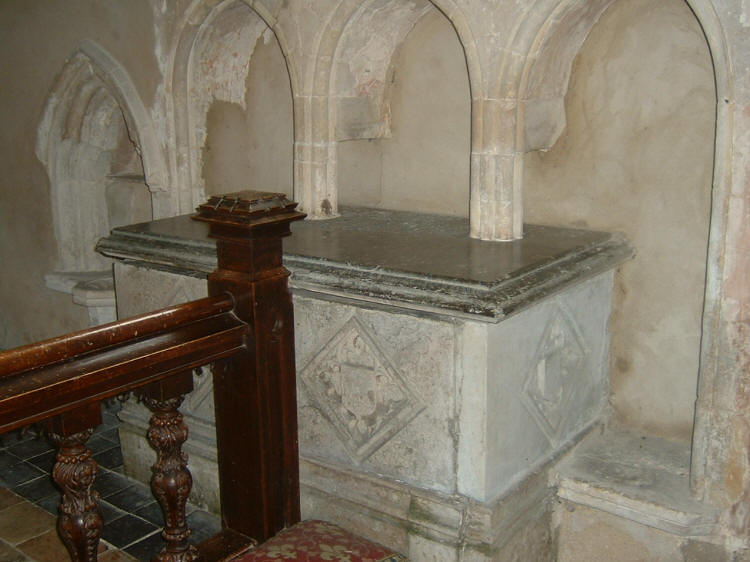
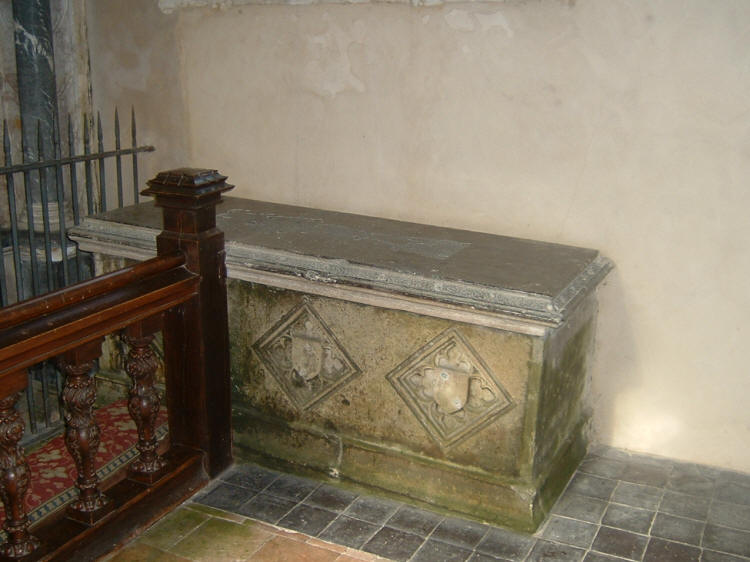
Beyond this lie two older table tombs - the
eastern one believed to belong to John Paston. It is likely that these
tombs were moved from nearby Bromholm Priory (see
Bacton) after it
was dissolved by Henry VIII.
The Paston Letters
are a fascinating account of life during the War of the
Roses period detailing the family's life including: legal wrangles, castle sieges and
mismatched marriages. The letters span three generations
of the family and were written during the reigns of
Henry VI, Edward IV and Richard III.
Most of the letters were written by John and Margaret
Paston (Margaret was the daughter of John Mautby - who
lived at Mautby (near Great
Yarmouth) and their two sons - both of whom were called
John. There were also a number of letters written by
William and Agnes Paston. Three centuries later the
letters were discovered at Oxnead Hall when the estate
there was being sold and fortunately they found there
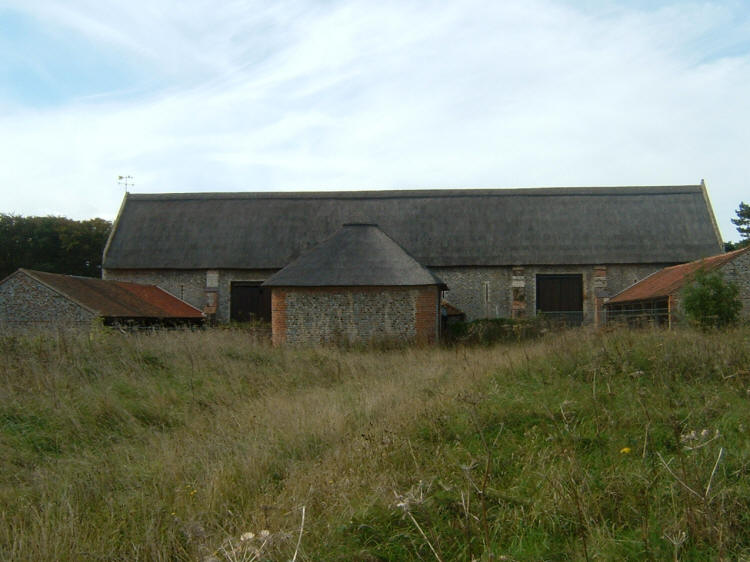
way into the hands of the Norfolk historian Francis Blomefield. Next to the church stands
the magnificent thatched Paston Barn which was
originally built in 1581 by Sir William Paston. The
barn is the only remaining 'Paston' building in the
village and is now home to a number of rare barbastelle bats.
It is also the focus of activities run by the Paston
Heritage Society. |

 Supported
by Norfolk Tourism
Supported
by Norfolk Tourism