|
|
|
|
River Yare
|
| The River Yare rises close to the village of
Shipdham near Dereham and then
winds eastwards towards
Norwich. At Barford it is joined by the smaller River
Tiffey. Then at Earlham, on the
outskirts of Norwich, it passes through Earlham Park
and loops round the
University of
East Anglia.
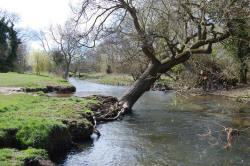
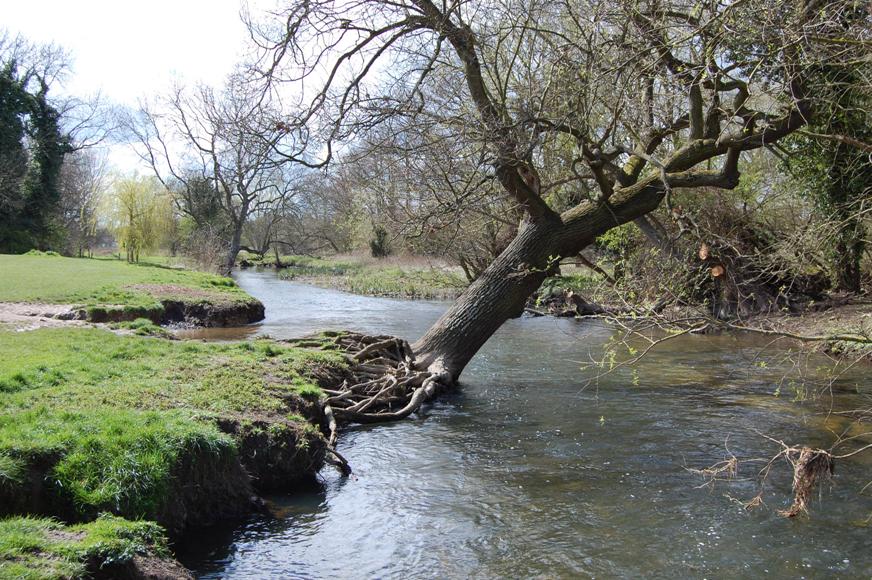
River Yare at Earlham Park
In Lavengro George Borrow
captured the beauty of the Yare at this point:
|
| 'At some distance
from the city, behind a range of hilly ground which
rises towards the south-west, is a small river, the
waters of which, after many meanderings, eventually
enter the principal river of the district, and assist to
swell the tide, which rolls down to the ocean. It is a
sweet rivulet, and pleasant it is to trace its course
from spring-head, high up in the remote regions of
Eastern Anglia, till it arrives in the valley behind yon
rising ground; and pleasant is that valley, truly a good
spot, but most lovely where yonder bridge crosses the
little stream. Beneath its arch the waters rush
garrulously into a blue pool, and are there stilled for
a time, for the pool is deep, and they appear to have
sunk to sleep. Farther on, however, you hear their voice
again, where they ripple gently over yon gravelly
shallow.' |
This scene has hardly changed since Borrow's day and the
park is a popular place for walkers and for children to
paddle in the summer. The Yare also provides an
important corridor for wildlife at this point with its marshes and wet woodland. After passing the
University lake, it skirts round the southern edge of Norwich
and merges with the River Wensum at Trowse - where it
becomes navigable. The Wensum is the larger of the two
rivers at this point, but it is the Yare that takes on
the name.
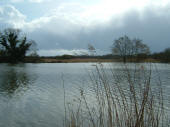
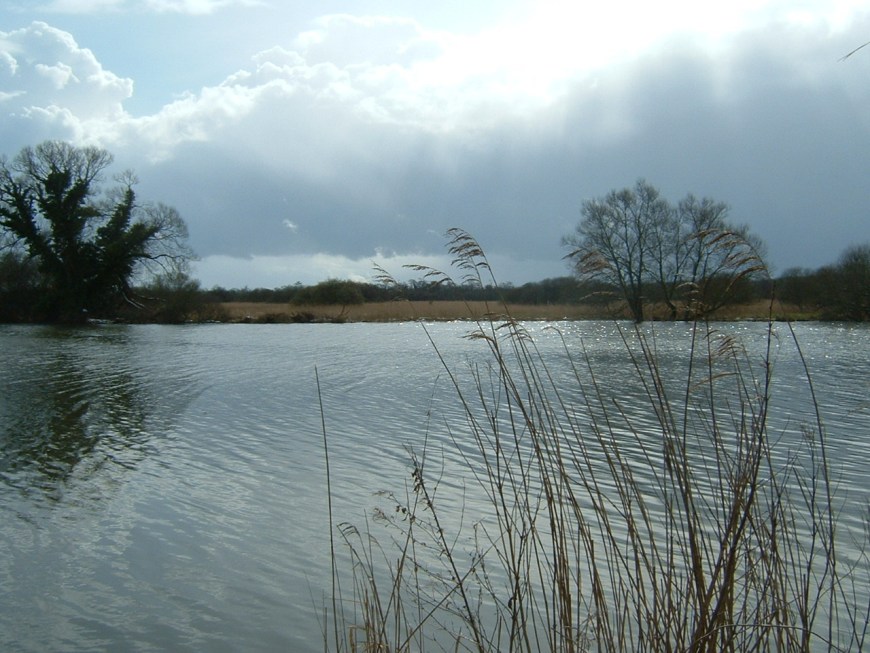
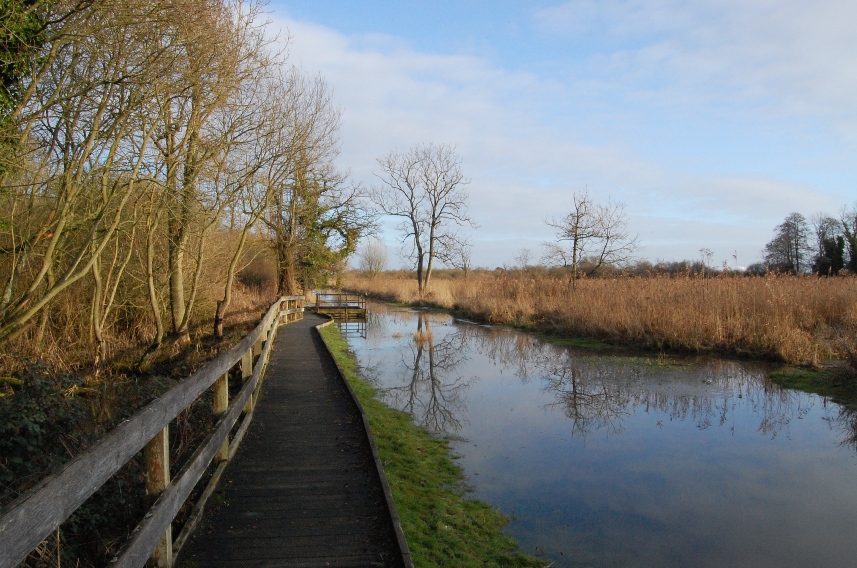
River Yare at
Strumpshaw
Flowing eastwards from Norwich, the river
passes through Postwick - which was frequently painted
by the Norwich School Artists. It then moves on to Bramerton
where one of Broadland's colourful characters - Billy
Bluelight - used to race boats up the river. His claim
was as follows:
|
| 'My name is Billy
Bluelight, my age is 45, I hope to get to Carrow Bridge
before the boat arrive.' |
The next village is Surlingham
- which was home to the
naturalist and writer Ted Ellis. Ellis lived in a
cottage at Wheatfen Broad for many years and turned the
surrounding marsh and fenland into a nature reserve. He
was an expert on the
eco-systems of the Norfolk Broads and a much-loved
nature diarist for the EDP newspaper.
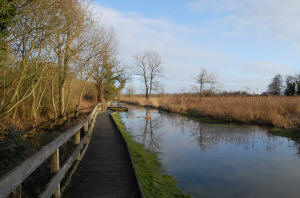
Wheatfen Broad Near Surlingham
Another colourful Broadland character made his living
on Rockland Broad and this was Jimmy Fuller - alias
'Old Scientific'. He was a wildfowler and marsh man
who earned money by shooting and collecting specimens.
He was even known to shoot Ospreys - in fact, anything
that he could later sell. The guide book writer, W. A.
Dutt, once met him and provided the following account:
|
|
'Fuller appeared from behind a reed stack just as I was
knocking at his cottage door and in a few minutes we
were afloat in his gun punt. In the dyke leading from
the cottage there was open water; but the Broad in spite
of two days' thaw was partially covered in ice through
which Fuller had broken a channel for this boat.' |
|
Further downstream still, the river passes
through Claxton - a
small village which is now the home of another naturalist -
this time Mark Cocker. In his book Crow Country -
he provides a fascinating account of jackdaws and crows
in the Yare Valley. Watching them pass overhead at
Buckenham - heading for
Buckenham Carrs - inspired him to try and understand more about their
movements. The book is a personal account of this
obsession which is centred on Norfolk but also takes in rookeries in other parts of the UK and Europe.
Two-thirds of the way between Norwich to Yarmouth
lies the village of Reedham
which perches on higher ground overlooking the marshes.
There is a railway swing bridge here - allowing larger
boats to pass and a chain ferry which carries cars
across the river.
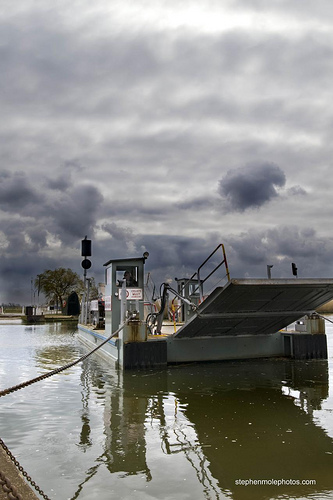
Reedham Ferry (Photograph © Stephen
Mole)
In his book The Rings of Saturn W.G. Sebald travelled
along the railway line here and crossed the river at
Reedham:
|
|
'Through Brundall,
Buckenham and Cantley, where, at the end of a straight
roadway, a sugar-beet refinery with a belching
smokestack sits in a green field like a steamer at a
wharf, the line follows the River Yare, till at Reedham
it crosses the water and, in a wide curve, enters the
vast flatland that stretches southeast down to the sea.
Save for the odd solitary cottage there is nothing to be
seen but the grass and the rippling reeds, one or two
sunken willows, and some ruined conical brick buildings,
like relics of an extinct civilisation.' |
|
In Coot Club by Arthur Ransome - the children
and Mrs Barrable sail up the Yare as far as Brundall in
an attempt to keep out of the way of the Margoletta.
On their way back they get stranded in the mud on
Breydon Water - which leads to the climax of the story.
In his verse narrative, The Broads (1919) - Hugh
Money-Coutts described Breydon as follows:
|
'On Breydon Water, when the tide is out,
The channel bounds no sailorman can doubt.
Starboard and port, the miry banks reveal
Where safety lies beneath his cautious keel.
But when the flood has wiped the water clean,
- Hiding the muddy haunts where seagulls preen
Their wings, and shake their heads - black pillars mark
The channel's edge for each adventuring bark.
Beware; the channel shifts, and now and then
A post deceives the hapless wherrymen.' |
|
Just beyond Breydon Bridge the Yare swings southwards
and flows through Great
Yarmouth before entering the North Sea.
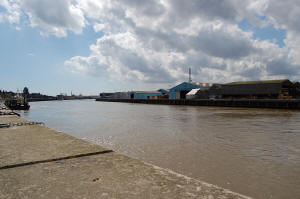
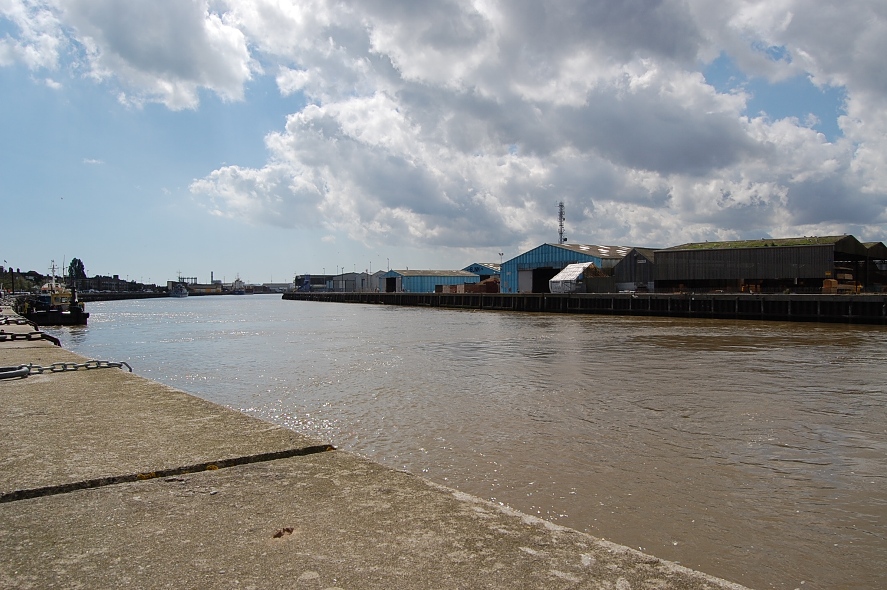
River Yare at Yarmouth |
Links:
More River Yare Photographs
Photographs of the Wherryman's Way
|
|
|
|

 Supported
by Norfolk Tourism
Supported
by Norfolk Tourism